AI implementation & training

AI makes the people you already have far better.

We build AI into the way your company already runs, and we train your people to use it. Not a platform you have to bend your business around — the missing pieces, shaped to fit how the work actually moves.

The goal is never a smaller team.

David Villegas, founder of ProofWright, at his desk
David Villegas, founder Operator first. I ran the operations, hit the walls, then built the software.
Why we don't sell headcount cuts

The companies that replaced people are hiring them back.

32%
of US hiring managers who cut jobs for AI have already rehired the same or similar roles
Robert Half · ~2,000 hiring managers
55%
of leaders who made staff redundant because of AI now say it was a mistake
Orgvue · 1,000 senior decision-makers
50%
of companies that cut customer-service headcount for AI will rehire for the same work by 2027
What we do

Three things, in this order.

A tool bought before anyone maps the work has to be worked around — and a worked-around tool is just another login nobody opens. We go the other way round.

01

Map how you actually work

Not the org chart — the real sequence, including the steps that live in someone's head and the ones that happen over text. Most of what's costing you money is in there.

02

Build the missing pieces

Software shaped around your process instead of the other way round, reaching your people where they already are — phone, text, whatever they actually open. It connects to what you already run; nothing gets ripped out on day one.

03

Train your team to use it

On their real work, showing what it does for their day — not yours. Courses stay behind, so the person you hire in March is trained the same way as the one who started in January.

Our work

Built around how you work. Never the other way round.

Operations platforms, field apps, pricing and estimating tools, AI agents that run daily work end to end. Every one was shaped around how that specific company already ran — which is exactly why yours won't look like these.

If the thing you need isn't on this page, that's the normal case, not the exception. The work is always the same: understand how you run, then build to it.

An operations dashboard showing open pipeline, jobs in production, and a prioritised action list
An owner's morning screen. Not a report you have to go and run — the list of what needs a decision today, assembled from every part of the business. Real software, sample company
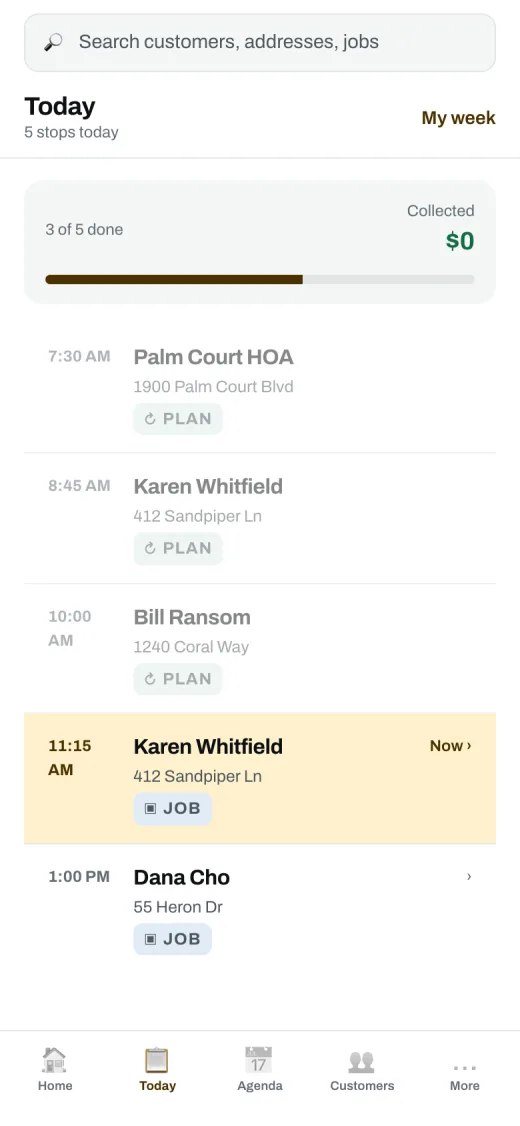
Three phone screens from a field application used by crews on site
The same system, in the field. Built for the phone the crew already has in their hand, because that's where the work actually gets recorded. Real software, sample company
The evidence

Two companies said the quiet part out loud.

Most reversals are silent — the roles come back with new titles and nobody puts out a statement. These two are on the record.

Klarna

Cut roughly 700 customer service jobs for an AI assistant that handled 2.3 million conversations in month one. Fourteen months later the CEO told Bloomberg it had gone too far, quality had dropped, and the company started rehiring humans.

Fortune · Forbes

Commonwealth Bank

Cut 45 customer service roles in July 2025 on the basis that an AI voice bot had reduced call volumes. It hadn't — volumes were rising, and the bank ended up paying overtime and putting team leaders on the phones. The redundancies were reversed a month later and the bank apologised for the "error".

ABC News · 21 Aug 2025

They aimed it at the payroll line instead of at the work.

Aimed at the work, the same technology does something else entirely. Economists at Stanford and MIT tracked 5,179 support agents across three million conversations, before and after an AI assistant was added. Same job, same people, tool added:

+14%
more issues resolved per hour, across everybody
+34%
for the newest and least experienced workers — the biggest gain by far
~0
change for the people who were already excellent at the job

That third number is the one that matters. It didn't replace the best person on the floor — it took what the best person already knew and handed it to everyone else. In the same study customer satisfaction rose and staff turnover fell. People stayed, because the job got less miserable.

Fair objection, so let's put it on the table: nearly all the hard research here measures customer-service work, because that's where the volume was big enough to study first. The mechanism isn't customer service. It's any job where most of the day is repetition and the hard part is judgment — quoting, scheduling, intake, compliance. That's why the biggest gain went to the newest people rather than the best ones.

IBM's own HR assistant resolves 94% of routine questions; the 6% that need judgment still go to a person, and IBM is tripling entry-level hiring in the US this year. That's the shape that works — the machine takes the repetitive volume, your people keep the judgment, and you can afford more of them, not fewer.

Study: Brynjolfsson (Stanford), Li (MIT Sloan) & Raymond, NBER Working Paper 31161.

How it works

Nothing gets switched off on day one.

You never run two systems in the dark hoping it works out. Each piece earns its place before the next one starts.

  1. BuildOne piece first — whichever process is costing you most right now.
  2. MigrateYour data comes across from whatever you're running today. Included, not an add-on.
  3. TrainThe people who'll actually use it, on their real work, until they trust it.
  4. SwitchOnly then does the old way go off and the new one go on.
Where to start

Bring us the one process everybody works around.

The one with the workaround everyone knows about — or the one you already know is costing you the most money. Forty-five minutes on video, no cost and no deck. Walk us through how it works today, whether that's quoting, scheduling, invoicing or onboarding. We'll tell you what we'd automate, what we'd leave alone because it's already fine, and what we'd teach your team to do themselves.

If there's nothing here worth building, we'll say so on the call.

Book the call